SQLITE NOT INSTALLED
Finding an old coin in a drawer or inherited tin can spark a small electric thrill: what you’re holding could be rare, worth little, or somewhere in between. This guide walks you through the practical steps to assess a best coin identifier app value—without jargon, without overpromising, and without doing anything that might damage the coin. You’ll learn what matters, which tools to use, where to look for reliable information, and how to turn curiosity into confidence when buying, selling, or simply cataloging a collection.
Why Coin Values Vary (and Why That Matters to You)
Two coins that look almost identical can have wildly different values. The single reason is that value derives from a mix of objective facts and human demand. Facts include metal content, minting numbers, and physical condition. Demand includes collector interest, historical significance, and market trends. Both sides can change over time; a coin once overlooked can become sought-after when collectors’ interests shift.
Understanding this dual nature—intrinsic versus numismatic value—keeps expectations realistic. An old silver coin always has some melt value because of the metal inside, but many coins command a premium over melt because of rarity or condition. Conversely, a visually attractive coin made from base metal can be worth far more than its face value simply because collectors prize it.
Quick Inspection Checklist: What to Look For Immediately
Before you reach for a reference book or an online price guide, do a simple, non-invasive inspection. This quick checklist helps you gather the right facts without altering the coin:
- Identify the country, denomination, and year.
- Check for mint marks (small letters indicating where the coin was struck).
- Note any obvious damage: deep scratches, holes, or corrosion.
- Decide whether the coin looks circulated, worn, or uncirculated (mint condition).
- Record weight and diameter if you have a scale and calipers.
These details form the foundation of any valuation. Keep them handy because you will refer to them repeatedly during research.
Tools You’ll Want on Hand
Valuing coins doesn’t require expensive gear, but a handful of inexpensive, reliable tools will dramatically improve accuracy and speed. Here’s a short table that lays out what to buy and why it’s useful.
| Tool | Purpose | Typical Cost |
|---|---|---|
| Loupe or magnifier (10x) | Read tiny mint marks, detect die varieties, inspect wear and surface issues | $5–$20 |
| Digital calipers | Measure diameter accurately to confirm type identification | $10–$30 |
| Precision scale (0.01 g) | Confirm weight to detect counterfeits or worn pieces | $15–$50 |
| Soft cotton gloves | Handle coins safely without fingerprints or oils | $5–$15 |
| Reference books / phone with internet | Check mintage, rarity, and market prices | $0–$40 |
Spend a little money on these basics. The cost is small compared to the risk of misidentifying or damaging a valuable coin.
Step-by-Step: How to Assess a Coin’s Value
Think of valuation as detective work. Collect evidence, verify against trusted sources, and weigh what you find. Here is a practical step-by-step routine that many experienced collectors follow.
- Handle the coin correctly: use gloves or hold by the rim to avoid oils and scratches.
- Record identifying details: year, denomination, country, and any mint marks.
- Measure weight and diameter; compare with standard specifications for that issue.
- Examine surfaces with a loupe to determine wear, strikes, and any damage.
- Search reference catalogs and online databases for that specific combination.
- Compare similar pieces in recent auction results or price guides to estimate market value.
- Decide if the coin is a candidate for professional grading or authentication.
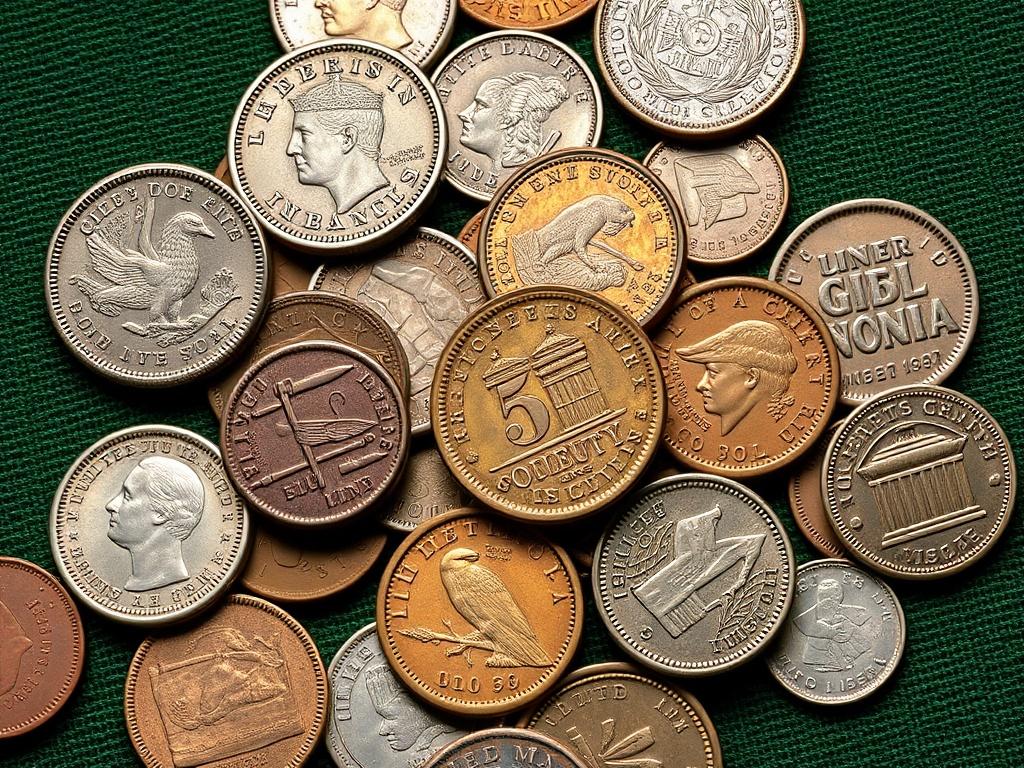
Each step informs the next. If, for example, weight doesn’t match known standards, that triggers a deeper counterfeit check. If the coin is a scarce variety in excellent condition, professional grading may be worthwhile.
Understanding Grading and Condition
Condition is the single most important driver of numismatic value. Grading attempts to quantify condition, and the most widely used scale in the United States is the Sheldon scale, which runs from 1 (Poor) to 70 (Perfect Mint State). The scale focuses on wear, strike quality, and eye appeal.
Here’s a compact view of how grades relate to everyday descriptions:
- P-1 to G-4: Poor to Good — heavily worn, details mostly flattened
- VG-8 to F-12: Very Good to Fine — major details visible, moderate wear
- VF-20 to EF-45: Very Fine to Extremely Fine — light wear on high points
- AU-50 to AU-58: About Uncirculated — minute traces of wear
- MS-60 to MS-70: Mint State — no wear, ranges from average to flawless strike
Remember that grading is partly subjective. Small differences in grade can mean large differences in value, so buyers and sellers often rely on third-party grading from services like NGC and PCGS for high-value coins because a slabbed grade is widely accepted in the market.
When to Consider Professional Grading
Professional grading isn’t necessary for every coin. It’s most useful when the coin is rare, potentially valuable, or when a slabbed grade will increase buyer confidence enough to cover grading fees. If you suspect the coin might be worth several hundred dollars or more, getting it slabbed could be a prudent investment.
On the other hand, grading costs money and time. Low-value coins, modern common dates, and heavily damaged pieces typically aren’t worth submitting unless you are trying to prove authenticity for a specific sale.
Detecting Counterfeits, Alterations, and Common Pitfalls
Counterfeits exist across all markets, from ancient coins to modern rarities. Some fakes are crude; others are sophisticated enough to fool casual inspection. The good news is that many counterfeits reveal themselves by failing basic checks: weight, diameter, or magnetic behavior.
Common red flags include mismatched weight, incorrect edge reeding, off-center designs, inconsistent letter styles, or surfaces that look artificially cleaned or too uniformly shiny. Unusual colors or pitting may indicate chemical damage. If anything seems off, slow down and gather more information before changing ownership or paying money.
Non-Destructive Tests
Never perform destructive tests on a coin. Instead, use these non-destructive techniques:
- Weigh and measure; compare to standard specs for the type.
- Check magnetism; most gold and silver coins are non-magnetic.
- Compare design details and lettering to a known genuine example.
- Search photos of coins with the same year and mint mark for die varieties or altered features.
- If necessary, consult a dealer or send the coin to a professional grading service with authentication.
For very high-value coins, laboratories or grading companies can perform X-ray fluorescence (XRF) or other spectrometric analyses to confirm metal composition without damaging the piece.
Reference Guides and Where to Look for Prices
Once you have the facts—year, mint mark, condition, weight—you need to compare your coin to recent market results. A variety of resources can help:
- Standard price guides (Whitman’s Red Book for U.S. coins, specialized regional catalogs for other countries).
- Third-party grading companies’ price guides and population reports (NGC, PCGS).
- Online databases and collector sites (Numista for world coins, CoinArchives for auction records).
- Recent auction results on eBay, Heritage Auctions, Stack’s Bowers, and regional auction houses (filter for sold prices, not listing prices).
Price guides are useful starting points, but the most accurate indicator is what collectors are actually paying now. That’s why recent auction prices matter more than a printed catalog number from a decade ago.
How to Use Online Marketplaces Carefully
Online marketplaces are a double-edged sword: they give unprecedented access to recent sales, but listings can be misleading. Always check completed listings or sold filters rather than active listings. Compare sold prices for coins with similar grade and provenance. Be wary of listings without clear photos, vague descriptions, or only one recent sale from an unfamiliar seller.
When possible, compare multiple platforms to triangulate value. Auction houses, dealer listings, and peer-to-peer sales together provide a fuller picture of a coin’s real market value.
Common Coin Types and Special Considerations
Different coin categories demand different knowledge. Here are a few examples and what to watch for in each:
- Silver and gold coins: check melt value versus collector premium. Melt sets a floor; rarity sets the ceiling.
- Ancient coins: provenance and authenticity are crucial; many look-alike fakes exist, and grading is specialized.
- Modern commemoratives: some carry collector premiums; many are common and hold little value beyond metal content.
- Error coins and die varieties: these can be valuable if recognized and documented, but require careful authentication.
Understanding the category helps you ask better questions and decide whether to pursue professional advice.
Examples of Key Dates (for context, not prices)
Certain dates and mint marks are well-known among collectors as “key dates.” For example, in U.S. coinage, the 1909-S VDB Lincoln cent and some early silver dollars like the 1893-S Morgan dollar are widely recognized by collectors. These examples are mentioned not as price indicators but as reminders: if your coin matches a key date and is in good condition, it deserves special attention.
You should always verify rarity and condition before assuming a coin is valuable simply because the date looks familiar. Even key-date coins can be fairly common in low grades.
Selling: Options, Fees, and How to Maximize Return
If you decide to sell, choose a channel that fits the coin’s value and your tolerance for time and risk. Here are common routes and what to expect.
- Local coin dealers: immediate sale, lower hassle, but often lower prices than auction results because dealers need margin.
- Auction houses: can produce higher prices for desirable coins but charge consignor fees and take time.
- Online marketplaces and forums: potentially higher returns but require careful listing, quality photos, and safe shipping practices.
- Consignment through specialist dealers: combines professional marketing with wider audience reach, at a cost.
Packaging, clear photos, documented provenance, and honest condition descriptions increase buyer confidence and can improve final sale prices. Be prepared for fees: auction houses and third-party grading both charge, and those costs should be weighed against expected increases in sale value.
Practical Selling Tips
When listing a coin for sale, take high-quality photos from both sides, include close-ups of mint marks and any damage, and describe the coin’s history when known. If you have receipts, old grading certificates, or provenance records, include those. Buyers pay for certainty: the more you supply, the more professional your listing looks.
If you are unsure of value, get multiple opinions. A single dealer’s offer is only one data point. Multiple quotations or a preliminary auction estimate can help you decide whether to sell now or hold for a better market.
Dos and Don’ts: Safe Practices for Handling and Caring for Old Coins
Caring for old coins is simple but strict: do the things that preserve surface integrity and avoid anything that could harm it. Coins are sensitive to oils, acids, abrasives, and temperature extremes. Good handling and storage preserve both condition and value.
- Do hold by the rim or use gloves.
- Do store coins in inert holders (Mylar flips, archival-quality 2x2s, or proper capsules).
- Do keep coins in a stable, low-humidity environment away from direct sunlight.
- Don’t clean coins with abrasives, baking soda, or chemical dips—cleaning usually destroys collector value.
- Don’t attempt to remove green corrosion or crust on ancient coins without expert advice—home treatments can permanently damage the surface.
When in doubt, leave the coin alone. The “natural” state is almost always preferable to an amateur cleaning.
When to Consult an Expert
Consult a professional when you encounter any of the following: a coin that might be rare, a suspected counterfeit, a significant estate of coins, or a contested provenance. Experts bring experience and market insight that a home inspection cannot match.
Choose experts with verifiable credentials—established dealers, certified graders, or recognized auction houses. Local coin clubs also provide a low-cost path to trusted opinions because members often have decades of experience identifying and valuing coins.
Questions to Ask an Expert
When you bring a coin to someone for appraisal, ask directly:
- Is this coin authentic? If not, why?
- What is the likely grade and how confident are you in that grade?
- What similar coins have sold for recently?
- Would you recommend grading or direct sale? Why?
Clear answers to these questions help you decide next steps—whether to sell, to grade, or simply to keep the coin as part of a collection.
Final Checklist and Quick Reference Table
Keep this simple checklist in your pocket when evaluating coins. It summarizes the practical steps you’ll rely on again and again.
| Step | Action | Why It Matters |
|---|---|---|
| 1 | Handle carefully (rim or gloves) | Prevents fingerprints and surface damage |
| 2 | Identify year, mint mark, denomination | Core identifying facts for research |
| 3 | Weigh and measure | Detects counterfeits or wear |
| 4 | Inspect with loupe | Assess wear, strikes, and damage |
| 5 | Check catalogs and auction records | Find current market value |
| 6 | Decide on grading or sale channel | Weigh costs against expected return |
Use this table as a mental checklist. It keeps you systematic and helps prevent common mistakes that erode value.
Parting Advice: Take Your Time and Keep Learning
Valuing old coins rewards patience. A careful, methodical approach yields better results than a hurried “instant appraisal.” Over time you’ll develop an eye for details that matter—strike quality, die varieties, and nuanced grades—but that skill grows with deliberate practice and exposure to verified examples.
Join a local coin club, read reputable catalogs, and track auction sales. Each coin you study is a lesson in history and market behavior. Whether you’re unearthing a minor curiosity or a notable rarity, the process of researching and understanding a coin offers its own satisfaction—often as rewarding as the value you ultimately discover.
Useful Quick Resources
To keep this practical, here are a few trusted places to start online and in print: Numista, NGC, PCGS, CoinArchives, and standard reference books like Whitman’s Red Book for U.S. coins. For local help, search for coin dealers with good reviews, inspect recent auction catalogs, and reach out to numismatic societies in your area.
If you follow the steps in this guide—observe carefully, research thoroughly, and consult experts when needed—you’ll be able to check the value of old coins with confidence and make decisions that protect both the coin and your pocketbook. Happy hunting.